
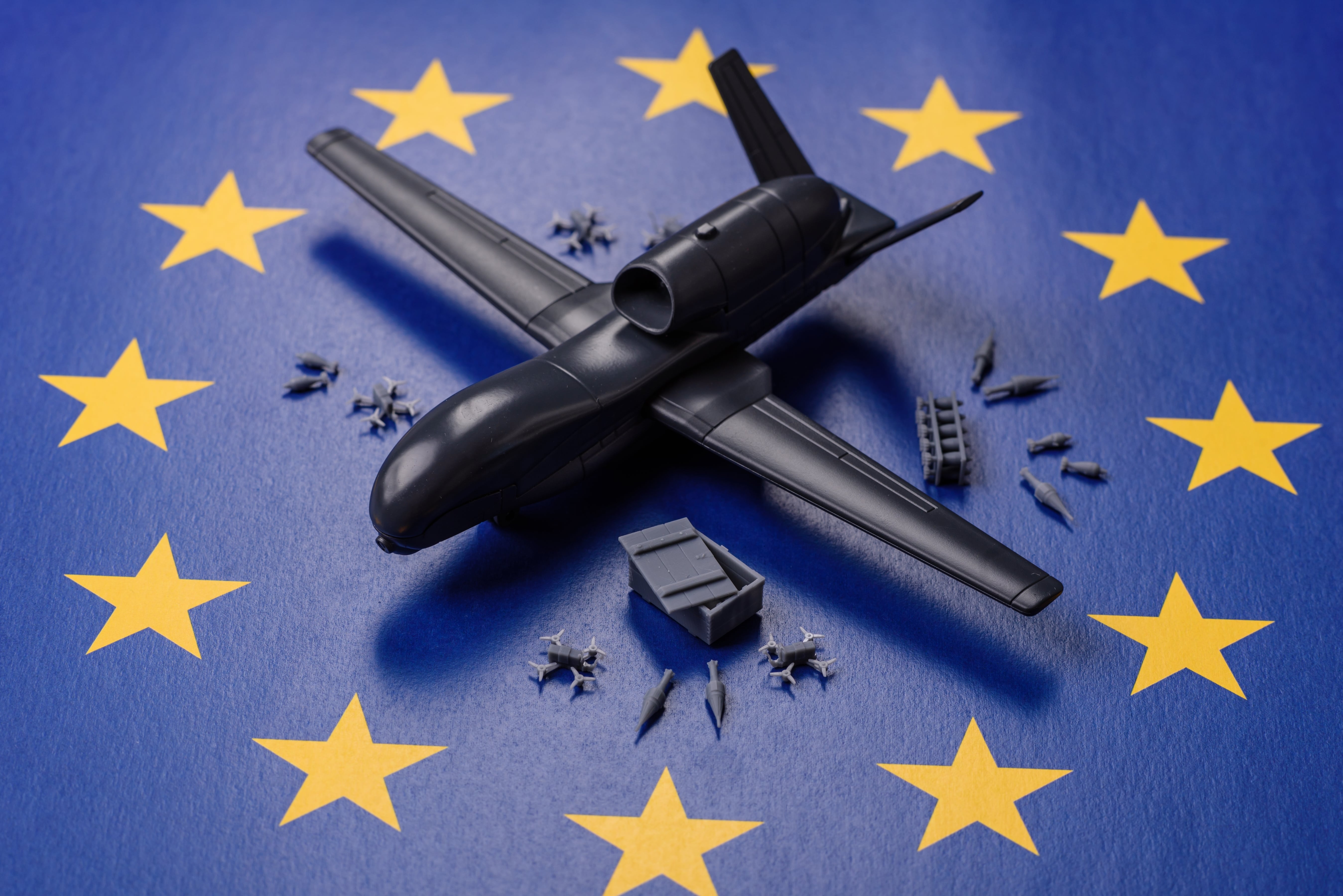
Europe’s security environment is rapidly evolving. Emerging threats, from drone incursions and cyber attacks to challenges in the space domain, are reshaping the contours of European defence. Traditional military strength alone is no longer sufficient. Today, technology, speed, and intelligence define effective defence. Modern conflicts have shown how unmanned systems, autonomous platforms, and data driven command networks are transforming the battlefield. For Europe, the imperative is clear: adapt or risk being outpaced.
Lessons from Modern Warfare
The wars of the past decade have transformed our understanding of what modern conflict means. From Ukraine to the Middle East, recent battlefields have shown that dominance no longer depends on troop numbers or heavy armour alone. Instead, information, agility, and technological integration have become the true determinants of military success. Drones, cyber operations, and electronic warfare have turned once static front lines into dynamic, data driven theatres.
For Europe, these conflicts serve as both a warning and a guide. They show that tomorrow’s defence will be defined not by size, but by speed, intelligence, and coordination. To remain secure, European nations must learn from these developments and apply their lessons across the continent’s collective security architecture.
Several lessons stand out:
Early, integrated detection networks are vital. Success in future conflicts will depend on the ability to detect threats early across multiple domains, including air, land, sea, cyber space, and outer space. Advanced radar, optical, acoustic, and signal intelligence systems must be fused into coherent, shared networks.
Layered defence is essential. Protecting Europe’s airspace and critical infrastructure requires short range, medium range, and long range systems that combine physical capabilities with electronic warfare and cyber capabilities.
Rapid adaptation and innovation are crucial. Defence is no longer defined by slow procurement cycles. The ability to develop, test, and deploy new capabilities, such as counter drone systems or artificial intelligence based threat detection, quickly is now a strategic advantage.
Connectivity and data dominance matter most. The ability to network assets, fuse information, and make rapid decisions creates a powerful force multiplier. In modern warfare, the system of systems is more decisive than any single weapon platform.
For Europe, these lessons point to the need for a defence structure that is flexible, technologically advanced, and interoperable across nations and domains. Such a transformation would strengthen collective resilience and ensure that Europe remains a credible actor in an increasingly complex security environment.
Technology as a Force Multiplier
Modernising Europe’s defence is about more than hardware. It is about connectivity, data, and autonomy. Technology today acts as a force multiplier, enhancing coordination, speed, and precision across all areas of defence.
Unmanned and counter unmanned systems are central to this shift. Drones have become inexpensive and disruptive, reshaping both surveillance and combat. In response, the European Drone Defence Initiative aims to detect, track, and neutralise unmanned threats across national borders.
Artificial intelligence further strengthens Europe’s capabilities. Tools powered by artificial intelligence accelerate threat detection, prioritise responses, and manage complex networks of assets, improving accuracy and safety on the battlefield.
To make these technologies effective, interoperability is essential. The European Union’s Readiness 2030 and ReArm Europe initiatives support joint procurement, shared standards, and faster production processes across member states. These are key steps toward a cohesive European defence network.
At the same time, industrial agility and mobility remain critical. Europe must be able to produce essential technologies quickly, reduce supply chain dependencies, and move troops and equipment efficiently across borders. These goals are reflected in the European Union’s Military Mobility Roadmap.
In short, Europe’s defence advantage will depend not only on its weapons, but on how effectively its systems, industries, and nations work together through technology.
The Strategic Imperative
The message is clear: Europe must do more than keep pace. It must lead. Modern defence technologies safeguard sovereignty, reinforce alliances, and enhance readiness in a volatile geopolitical landscape. By investing in innovation today, Europe secures its future security, resilience, and autonomy.
Sovereignty comes from a strong domestic defence industrial base that reduces reliance on foreign suppliers and strengthens strategic autonomy.
Alliance value increases when a technologically advanced Europe contributes more effectively to NATO and other partnerships, reinforcing collective deterrence.
Future readiness requires anticipating technological change. Yesterday’s tools will not address tomorrow’s challenges. Defence innovation must be proactive, not reactive.
Economic benefit is significant. Defence technology drives innovation and generates high skilled jobs, with positive spillover effects for civilian industries.
Conclusion
Modern defence is no longer defined by battalions and tanks. It is defined by networks, data, autonomy, and speed. For Europe, embracing this transformation is a strategic necessity. The continent must invest now, not only in advanced systems, but also in the institutions and industrial foundations that will deliver tomorrow’s security. By doing so, Europe safeguards its borders, its autonomy, its alliances, and its place in a future where technological strength defines power.
